
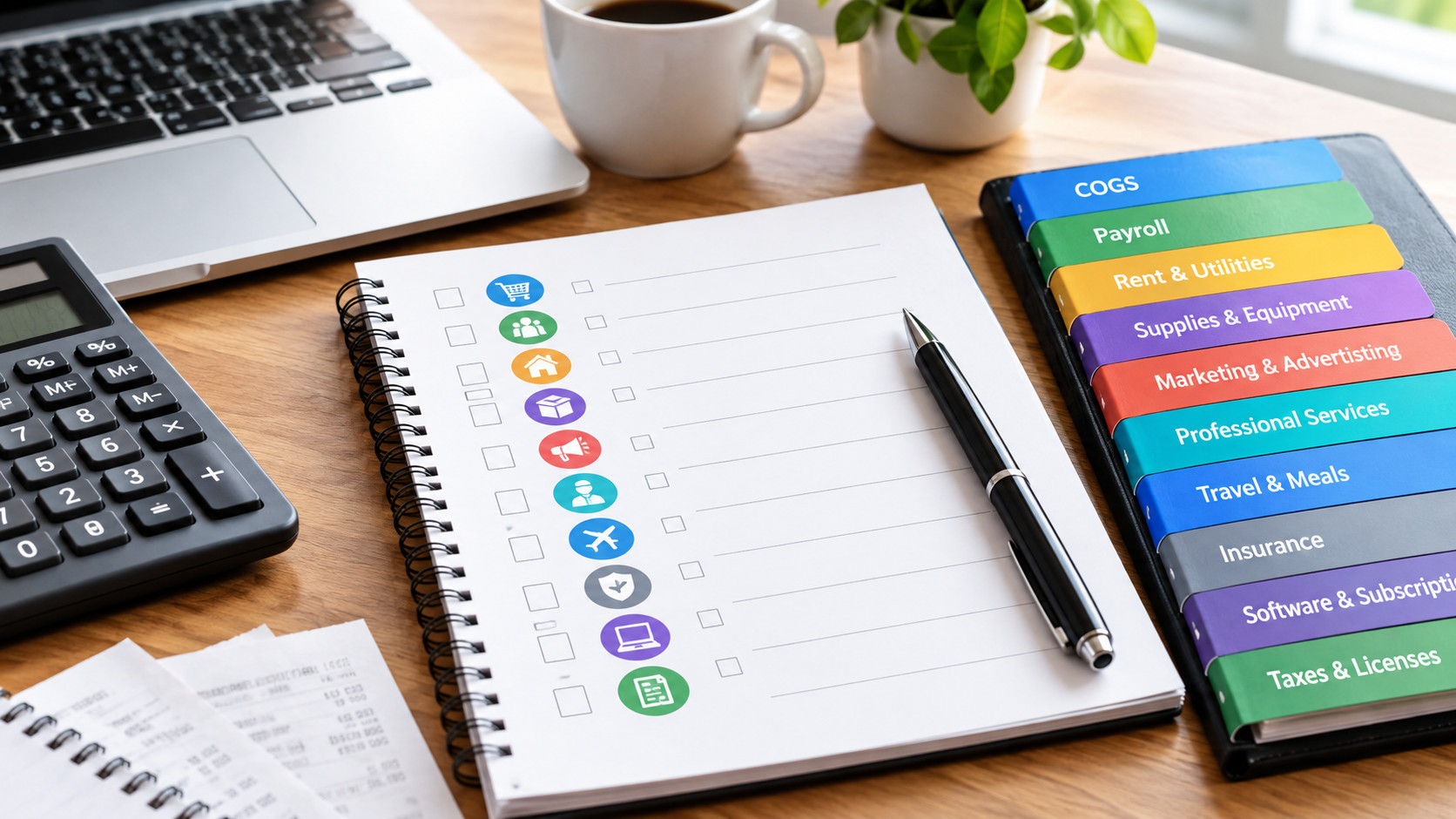
Here’s the short answer: business expenses should be categorized by type — such as rent, payroll, supplies, marketing, utilities, and travel — following the standard categories the IRS and your accounting software use, so your profit and loss statement stays accurate and your tax deductions don’t get missed at year-end.
It sounds straightforward, but this is one of the most common places small business owners lose money — either by miscategorizing expenses so deductions get missed, or by mixing personal and business spending until nobody can tell what’s actually a write-off. Here’s how to do it correctly.
Why Expense Categorization Matters
Every expense you categorize affects two things directly:
- Your financial reports — a messy chart of accounts makes your profit and loss statement useless for real decision-making
- Your tax return — miscategorized or missing expenses mean missed deductions, which means overpaying the IRS
If your books aren’t structured well, you’re either paying more in taxes than you should, or making business decisions based on numbers that don’t reflect reality. Neither is good.
The Core Business Expense Categories
Most small businesses can organize expenses into these standard categories:
- Cost of Goods Sold (COGS) — materials, inventory, or direct costs of producing what you sell
- Payroll — wages, salaries, and payroll taxes
- Rent and Utilities — office, storage, or shop space, plus electricity, water, internet
- Supplies and Equipment — office supplies, tools, small equipment purchases
- Marketing and Advertising — website costs, ads, promotional materials
- Professional Services — bookkeeping, legal, consulting fees
- Travel and Meals — business travel, mileage, client meals (subject to specific IRS limits)
- Insurance — business liability, property, or professional insurance
- Software and Subscriptions — accounting tools, project management apps, industry software
- Taxes and Licenses — business licenses, permits, state filing fees
Your specific categories should match your industry. A retail business will lean heavily on COGS and inventory, while a consulting business will have almost none of that but more professional services and software costs.
Common Categorization Mistakes
- Lumping everything into “Miscellaneous.” This is the fastest way to lose track of deductible expenses and confuse your accountant at tax time.
- Mixing personal and business expenses. Using one card for both makes reconciliation harder and puts personal purchases at risk of being flagged in an audit.
- Inconsistent categories month to month. If “software” is sometimes filed under “supplies” and sometimes under its own category, your reports won’t be reliable year over year.
- Not tracking mileage or travel properly. These are commonly missed deductions simply because receipts or logs aren’t kept.
A Simple Monthly Expense Checklist
- Separate business and personal accounts (if not already done)
- Review every transaction from the past month and confirm the category
- Flag anything unclear and follow up before it’s forgotten
- Reconcile bank and credit card statements against your books
- Confirm recurring subscriptions are categorized consistently
- Save receipts for anything over your record-keeping threshold
- Review your profit and loss statement for anything that looks off
Doing this monthly, instead of once a year, turns a stressful year-end scramble into a five-minute check-in.
When to Get Help
If you’re spending hours each month trying to figure out where an expense belongs, or you’re not confident your categories line up with what your tax preparer needs, that’s usually the sign to bring in a professional. A bookkeeper keeps this consistent every month so nothing falls through the cracks. See our Monthly Bookkeeping Services for how we handle this for Sanford-area businesses, or explore our full range of services if you’re also looking for tax help.
Frequently Asked Questions
What are the main categories for business expenses? Standard categories include cost of goods sold, payroll, rent and utilities, supplies, marketing, professional services, travel, insurance, software, and taxes and licenses. Categories should be tailored to your specific industry.
Can I categorize business expenses myself in QuickBooks? Yes, but consistency is the challenge. Many business owners start strong and fall behind within a few months, which is why regular reconciliation with a bookkeeper helps.
What happens if I categorize an expense incorrectly? It can distort your financial reports and cause you to miss legitimate tax deductions, or in some cases, claim deductions you shouldn’t. Regular review catches these errors early.
How often should I review my expense categories? Monthly is best. Waiting until tax season makes it much harder to remember what an expense was for or find missing receipts.
Do personal and business expenses need separate accounts? Yes. Keeping them separate is one of the simplest ways to protect your deductions and avoid complications in an audit.
Want Your Books Categorized Correctly Every Month?
If tracking and categorizing expenses feels like a chore you keep putting off, we can take it off your plate. Book a free consultation with our Sanford-based team, or visit our homepage to see everything we offer.